The basic difference
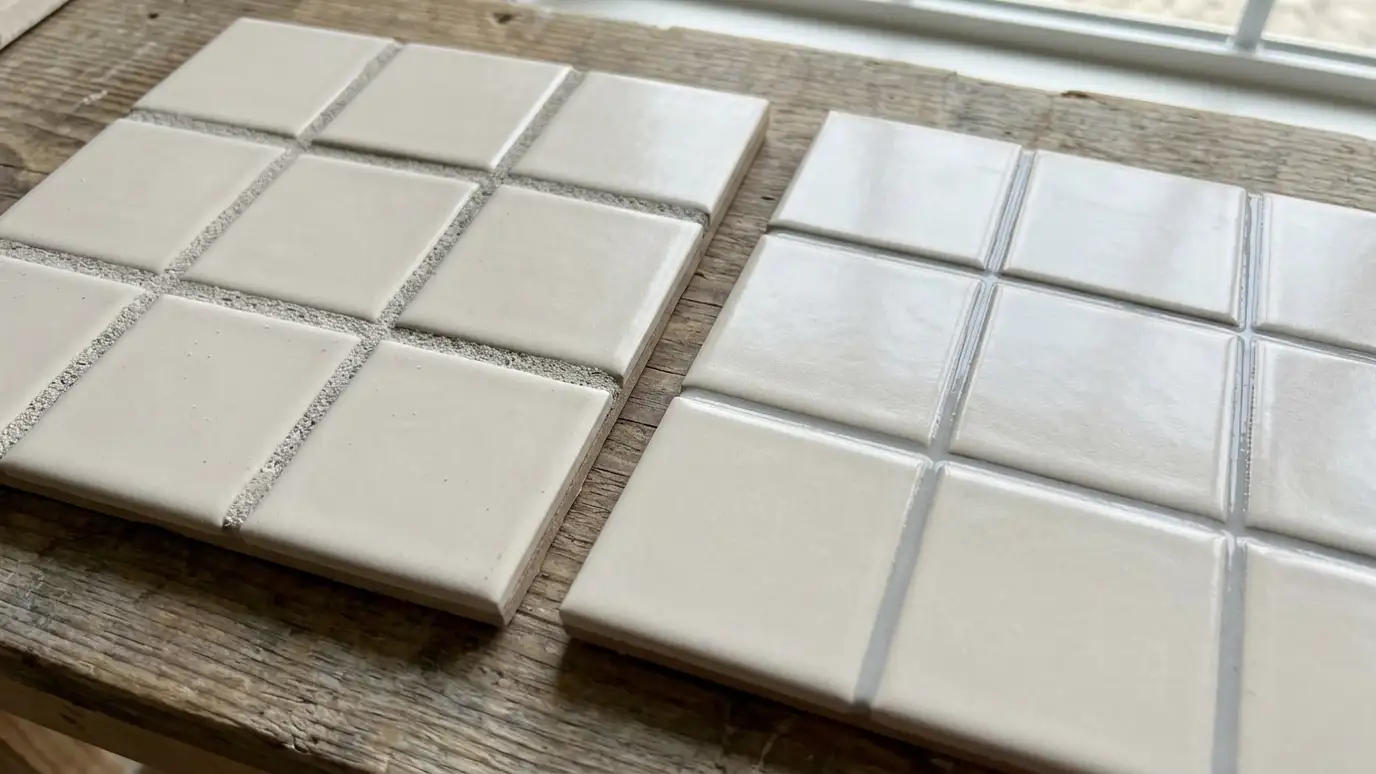
Cement grout is cement, sand and pigment mixed with water. Epoxy grout is resin and hardener with filler. One is porous, the other is not, and that single fact explains most of the differences.
Urethane grout sits between them.
Stains and moisture
Cement grout absorbs spills, soap and water unless sealed, and it can grow mildew. Epoxy resists stains, acids and moisture and does not need sealing.
In showers and kitchens, that is a big advantage.
Cost
Cement grout costs less for materials and labor. Epoxy costs more because the material is more expensive and the work takes more skill and time.
Many owners find the lower upkeep makes up part of the difference.
Installation
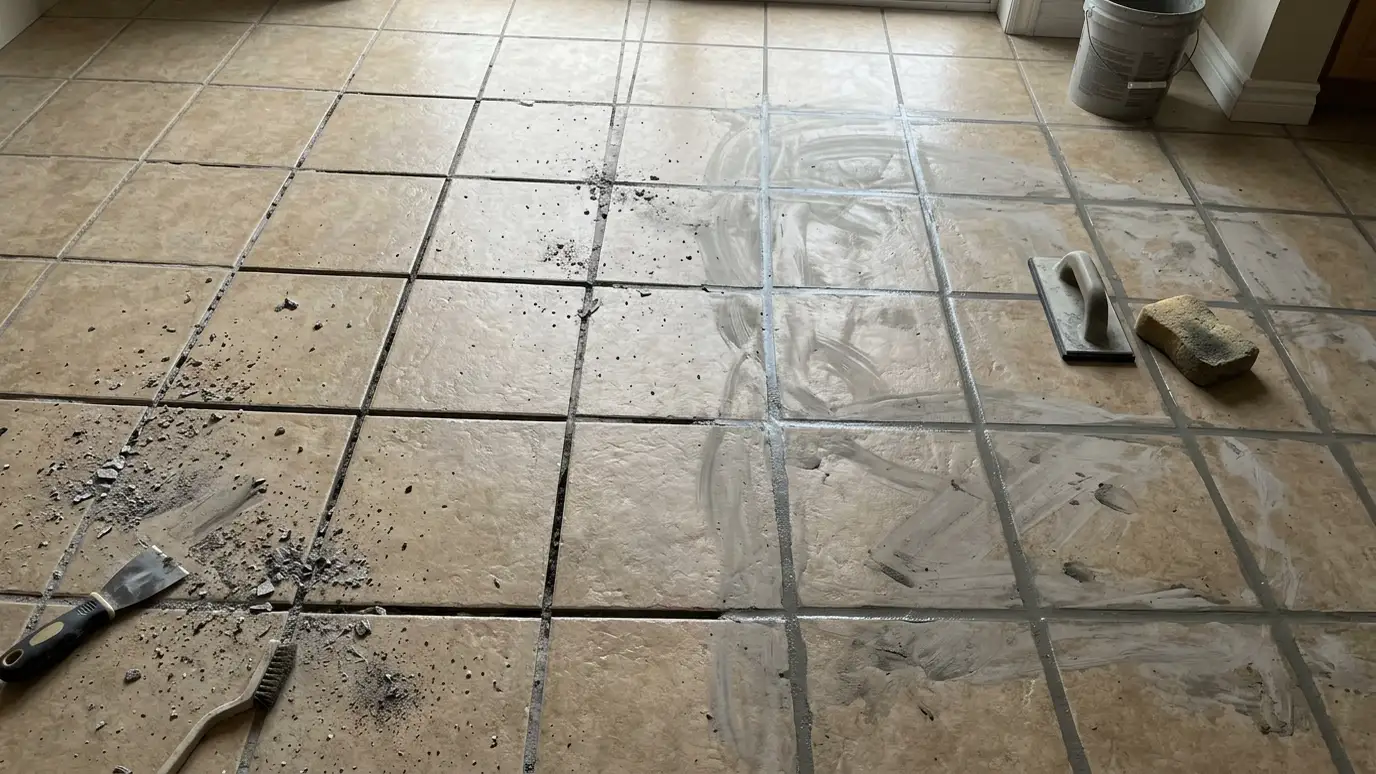
Cement grout is forgiving and easy to repair. Epoxy sets quickly and must be cleaned off the tile fast. It rewards experience.
Poorly installed epoxy leaves a film that is hard to remove.
Look and color
Cement grout has a matte, slightly textured look and a huge color range. Epoxy is smooth with a more uniform look, comes in many colors and offers special effects like sparkle.
Some epoxy can amber in sunlight.
Which where
Epoxy is a great choice for showers, counters, kitchens and commercial floors. Cement is a good fit for dry floors and walls and budget projects. Many homes use both.
A consultation matches the grout to each room.
Use epoxy where stains and moisture are a constant fight, and cement where a lower cost and easy repair matter more.