Start with the basics
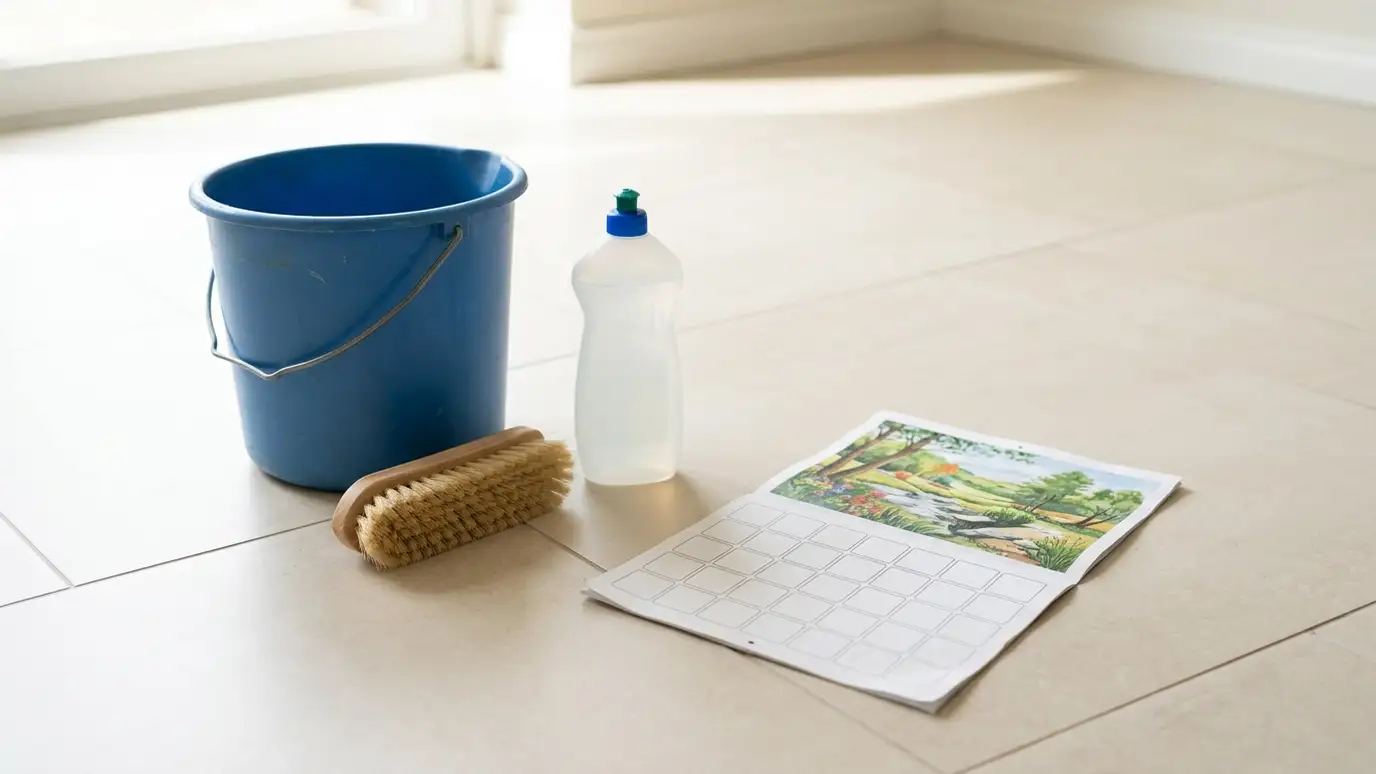
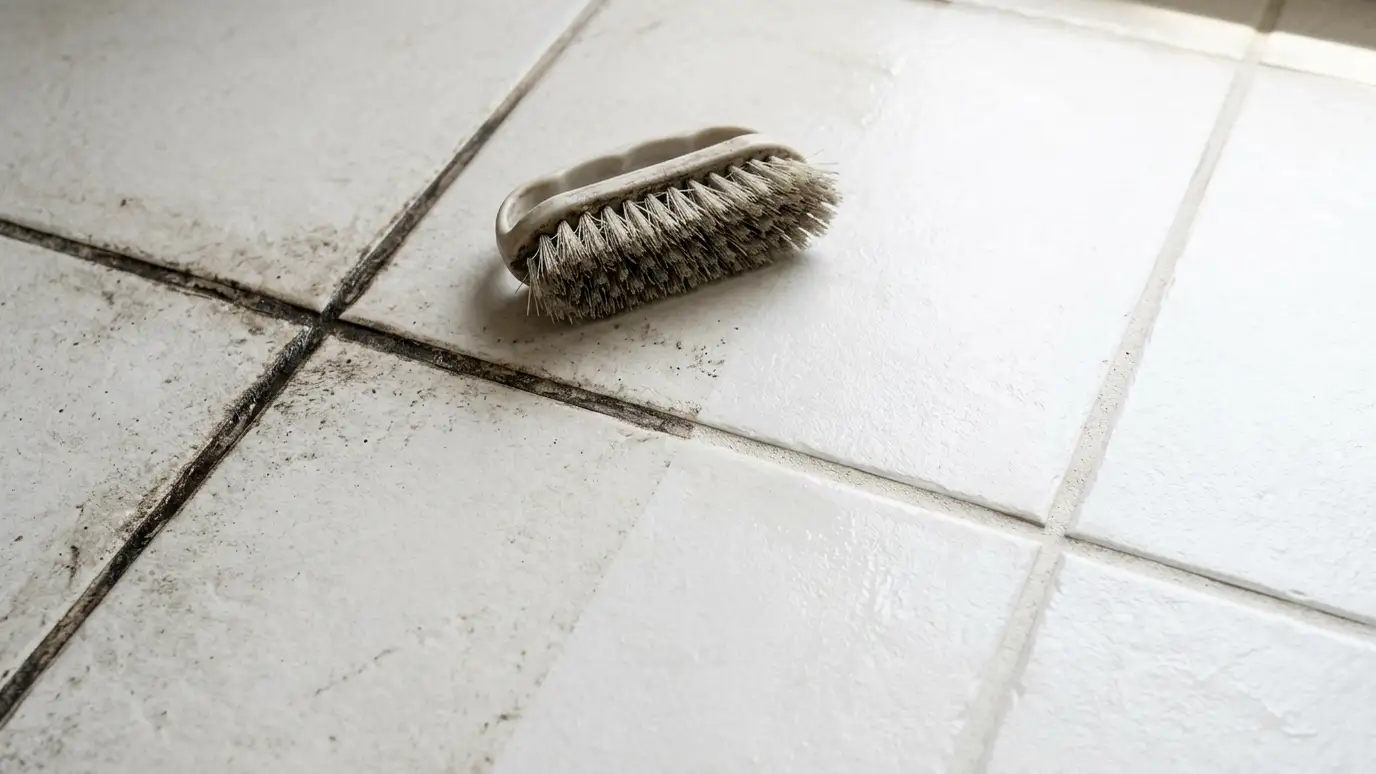
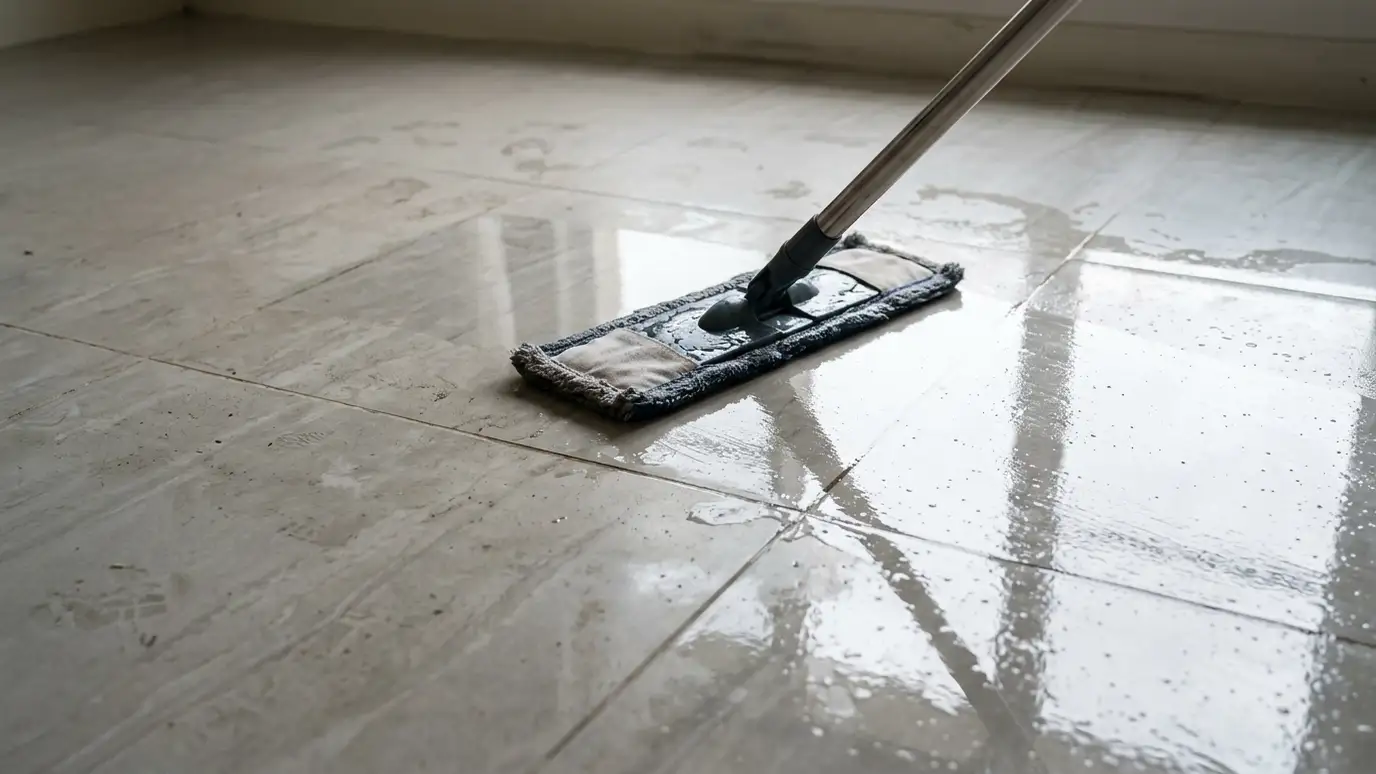
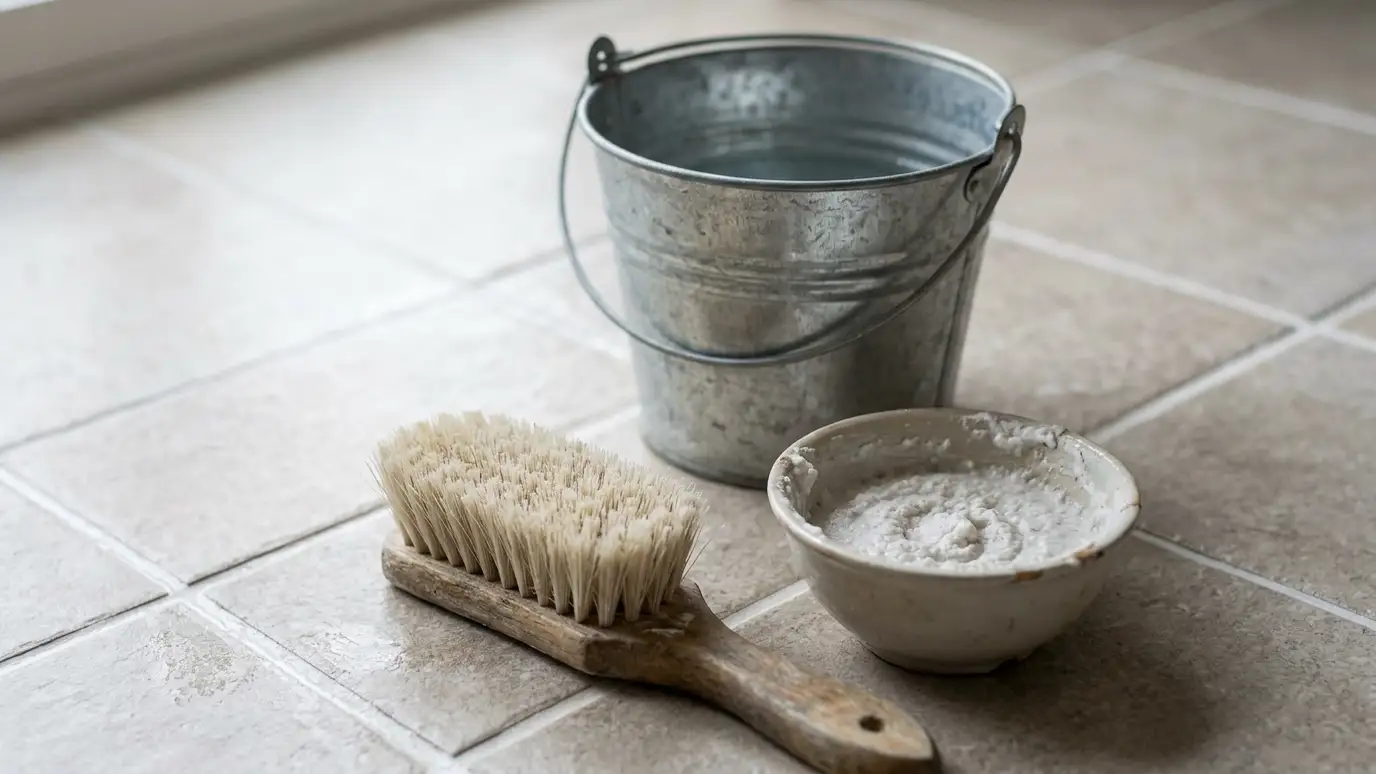
Sweep or vacuum first so grit does not scratch. Use warm water and a neutral cleaner with a soft nylon brush, working along the lines. Rinse with clean water and dry with a towel.
Many lightly soiled lines come clean with nothing more.
Stronger options
For tougher soil on cement grout, use an oxygen-based cleaner mixed with warm water, let it sit for ten to fifteen minutes and scrub. Rinse thoroughly. Baking soda paste helps with light stains.
Always test in a hidden spot first.
What to avoid
Never mix bleach with ammonia or acids. Avoid wire brushes and harsh acids on grout and stone. Vinegar is acidic and can etch marble, travertine and limestone, and can eat at cement grout over time.
Steam can be effective on sealed, sound grout and harmful on cracked grout.
Natural stone cautions
Stone needs stone-safe cleaners. Marble, travertine and limestone dissolve in acids, and many bathroom products contain them. Use pH-neutral cleaners and soft tools.
If you are unsure what your stone is, ask a professional.
Prevent buildup
Wipe spills quickly, squeegee showers, ventilate and seal cement grout. A neutral daily or weekly cleaner prevents film that traps dirt.
Avoid oily mops and soaps that leave residue.
When to call a professional
If grout stays dark after cleaning, crumbles, smells musty or has black growth that returns, the problem is deeper than the surface. Professional cleaning with extraction, sealing or recoloring may be the answer.
A free estimate tells you which.
Start gentle, never mix chemicals, avoid acids on stone and call a pro when stains return.