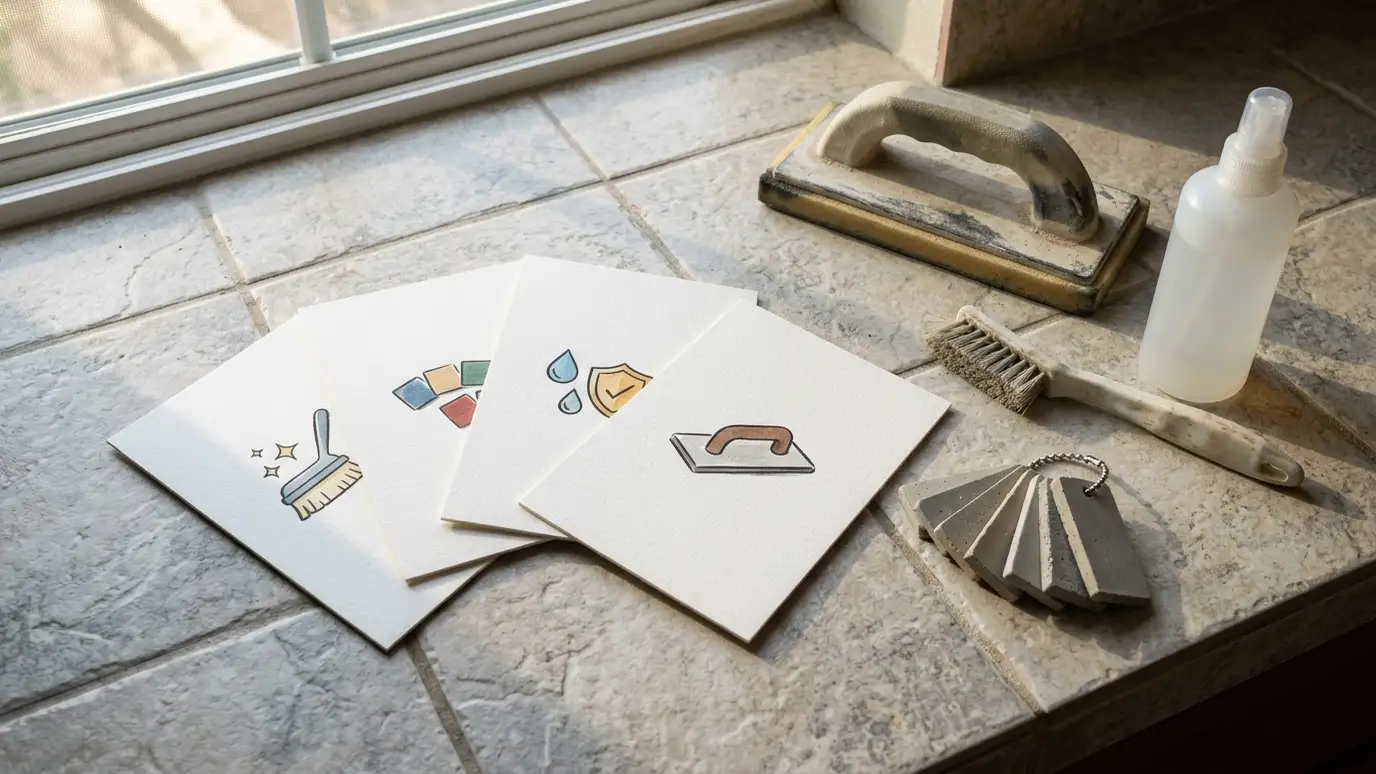
Know your stone
Marble, limestone and travertine are soft and react to acids. Granite is hard and dense. Slate is layered and can flake. Each needs slightly different care.
If you are unsure, a quick test tells us what you have.
Use the right cleaner
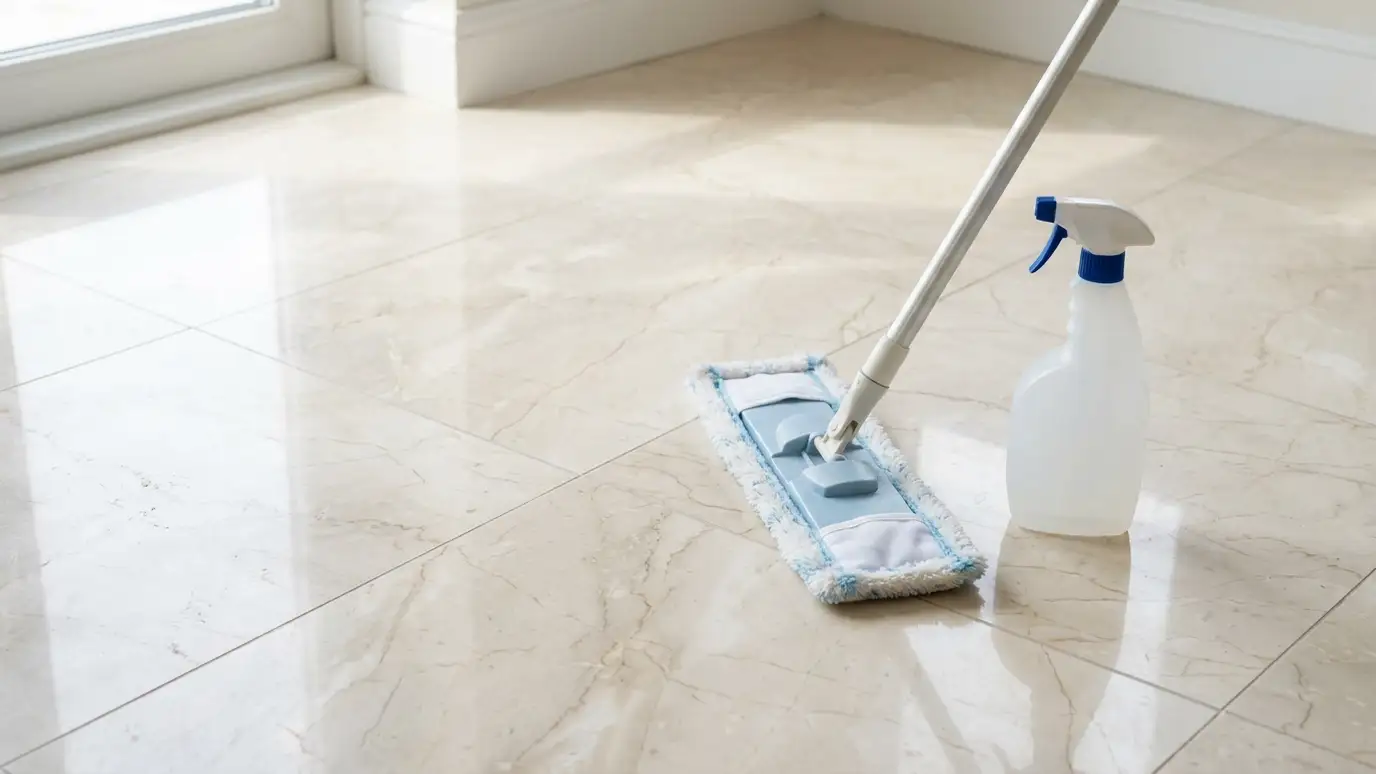
Use pH-neutral cleaner made for stone. Never use vinegar, lemon, bleach, ammonia or abrasive powders on marble, limestone or travertine.
Soft cloths and mops prevent scratches.
Seal appropriately
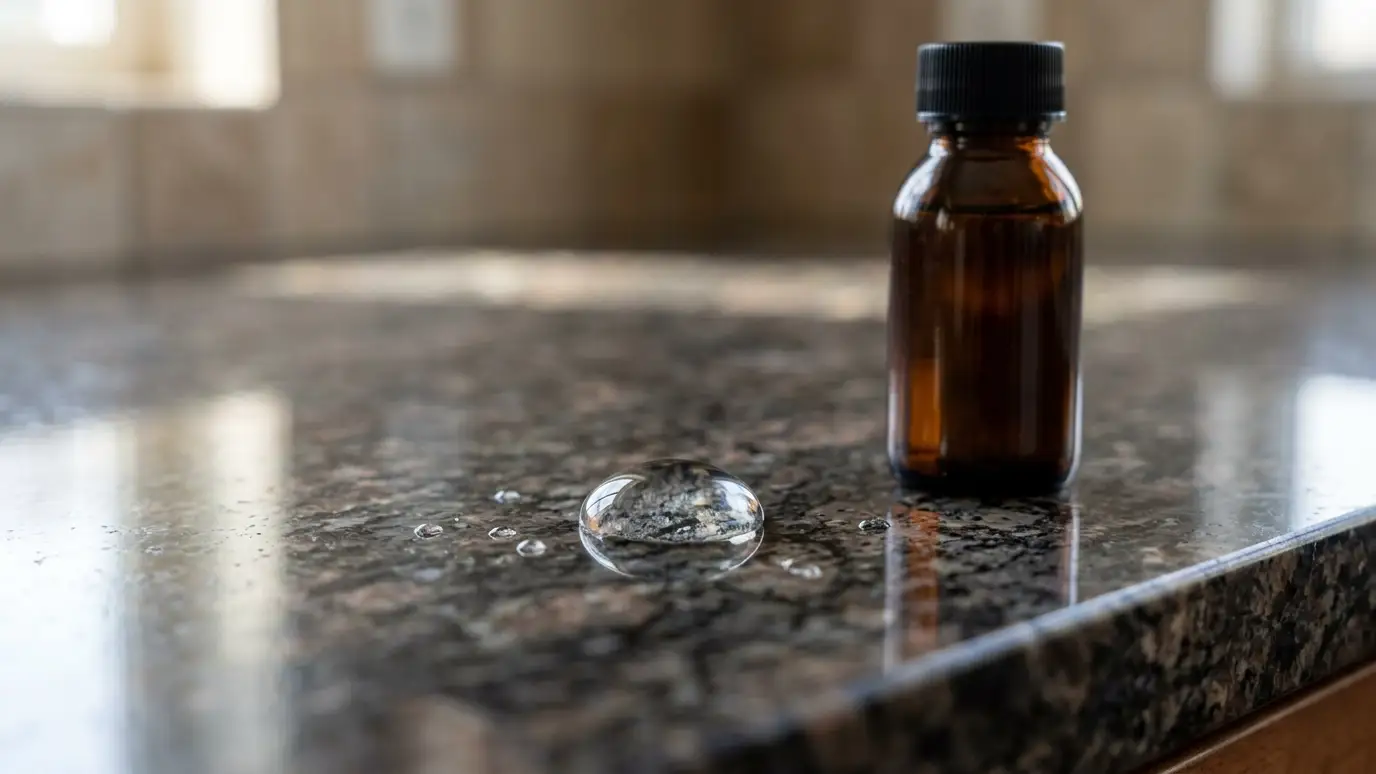
Most stone benefits from a penetrating sealer. It slows staining but does not stop etching. Test with a water drop to see if the seal is working.
Reseal when water stops beading.
Prevent etches and stains
Wipe spills quickly, use coasters and trivets, avoid acidic foods and drinks on marble counters and use mats at entries to keep grit out.
Small habits prevent big repairs.
Restore when needed
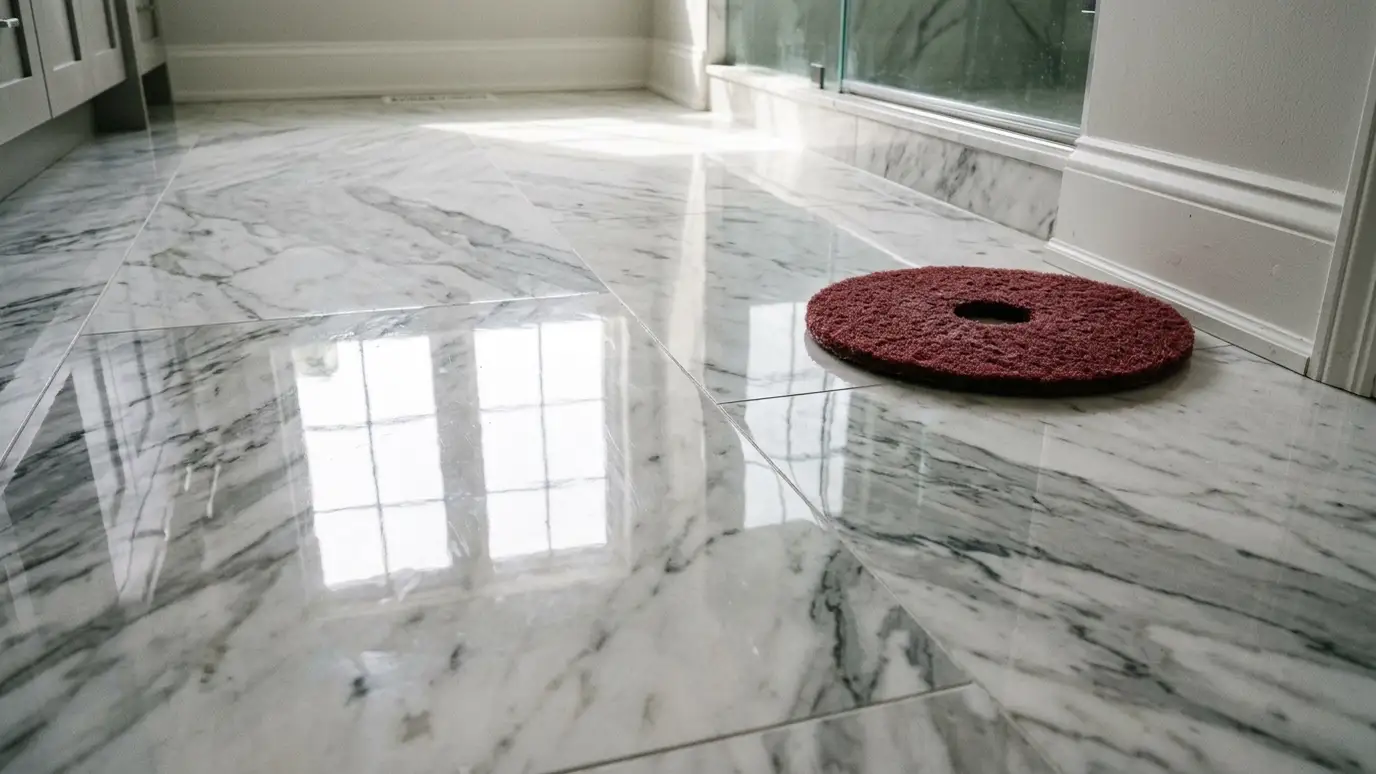
Etching, scratches, dullness and stains can usually be removed by honing, polishing and poultices. This is professional work with diamond abrasives and careful chemistry.
Restored stone can look new.
Care for the grout
Grout lines in stone floors need their own care. Epoxy grout can resist stains and avoid the need to seal grout lines.
Use soft brushes and neutral products.
Use stone-safe cleaners only, seal the stone and wipe spills fast.